Termite Life Cycle & Behavior

How Termites Grow, Multiply, and Spread in Structures

Termites are highly organized social insects that live and work in colonies. Each colony functions as a coordinated system where different types of termites perform specific roles that help the colony survive and grow. Because termites feed on cellulose found in wood and plant materials, homes and buildings can become ideal food sources once termites gain access.

Unlike many pests that feed occasionally, termites consume wood continuously. Once a colony begins feeding on structural wood, damage can gradually spread as the colony expands and searches for new food sources.

Understanding the termite life cycle and behavior helps explain how infestations develop and why termite activity can remain hidden for long periods.
How-Termites-Grow,-Multiply,-and-Spread-in-Structures
The-Stages-of-the-Termite-Life-Cycle

The Stages of the Termite Life Cycle

From Egg to Colony Member

A termite colony grows through several developmental stages. Each stage plays a role in maintaining and expanding the colony.

Egg Stage

The queen termite lays eggs that develop into new members of the colony. In large colonies, the queen can produce thousands of eggs, allowing the population to grow steadily over time.

Nymph Stage

Once eggs hatch, young termites develop into nymphs. During this stage they molt several times and eventually develop into workers, soldiers, or reproductive termites.

Worker Termites

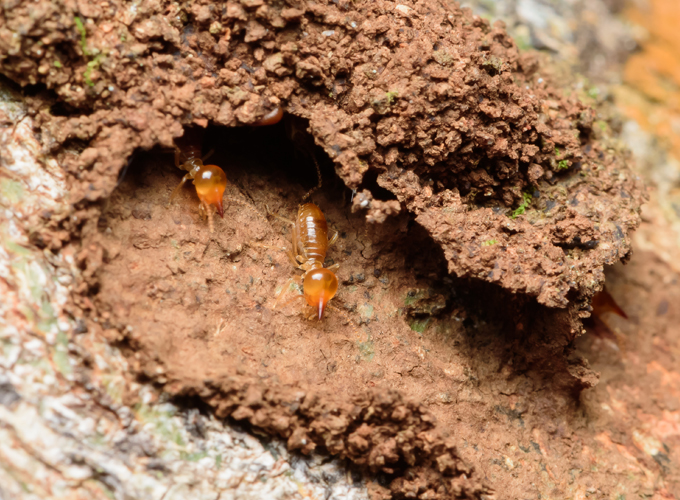
Worker termites make up the majority of a colony and perform most of its work. They feed on wood and cellulose, build tunnels and mud tubes, feed other termites, and maintain the nest. Their constant feeding is responsible for most termite-related structural damage.

Soldier Termites

Soldiers defend the colony from ants and other threats. They do not feed themselves and rely on workers for survival.

Reproductive Termites

Reproductive termites include the king, queen, and swarmers. Swarmers leave established colonies to form new ones, which allows termite populations to spread to nearby structures.

Understanding Termite Behavior

Many termite species, especially subterranean termites, live underground and travel to wood through protective mud tubes. These tubes protect termites from dry air and sunlight while allowing them to move safely between soil and structural wood.
Common termite behavioral traits include:
Because termites consume wood internally, significant damage can occur before surface signs become visible.
Understanding-Termite-Behavior

How Quickly Termites Can Cause Damage

The amount of damage termites cause depends on the size and age of the colony. As colonies grow larger, feeding activity increases.
Time FrameColony ActivityPossible Structural Impact
First MonthsColony begins feeding and creating tunnelsMinor internal wood damage
About One YearColony population increasesWood components begin to weaken
Multiple YearsMature colony with swarmersSignificant structural damage possible
A mature termite colony may contain hundreds of thousands of members feeding continuously.
Why-Termite-Behavior-Makes-Early-Detection-Important

Why Termite Behavior Makes Early Detection Important

Because termite colonies grow steadily and feed around the clock, infestations can expand quietly inside structural components. Swarming events often indicate that a colony has matured and is capable of spreading to new areas.

Understanding termite behavior helps property owners recognize why routine inspections and early detection are important for protecting structural wood and reducing the risk of long-term damage.


Get Started Today

Learn More About Termites

Understanding how termites grow and behave helps property owners recognize risks and take preventative steps to protect their property. Educational resources and regular inspections help identify termite activity before serious structural damage develops.
spider-top-right
spider-bot-left