
How Nutrition, Collagen, and Recovery Support Tendon and Soft Tissue Healing
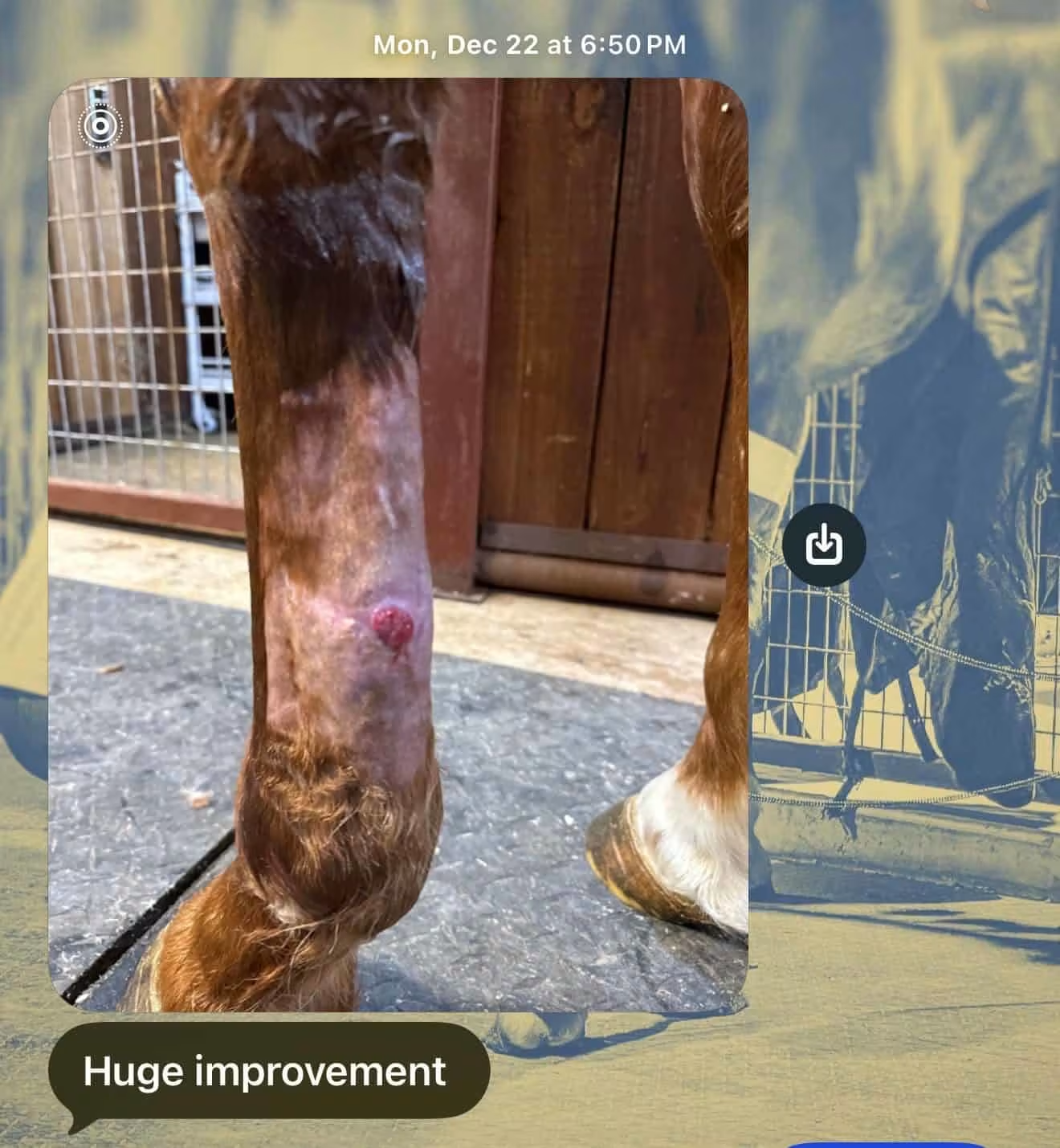
Mop tried to remodel her leg this fall. Not a minor knock, but a full soft tissue injury that involved deeper structures and required real recovery.
It turned into a strong reminder of something that often gets overlooked. Wound healing is soft tissue healing, and a large part of that process comes down to nutrition and available building materials, not just wraps and treatment protocols.
Mop’s Injury and Recovery Timeline
This was not just a surface wound. The injury involved the deep digital flexor tendon (DDFT) and superficial structures in a high-motion area.
Timeline:
- 10/16 – Injury involving skin, DDFT, and superficial tissue
- 10/25 – Started Myopulse 2–3 times per week
- 11/10 – Re-check showed improvement in DDFT and superficial structures
- 11/24 – Added NutriSana EQ CORE
- 12/5 – Increased to REBOUND (1.5× CORE) and began regional limb perfusions (RLPs)
This was a full soft tissue recovery process, not just wound management.
Why a Wound Is Still a Soft Tissue Injury
It is easy to separate injuries into categories.
Soft tissue injury usually refers to tendons and ligaments.
A cut or wound is often treated as something external.
The body does not work that way.
A wound like this involves multiple layers trying to heal at the same time:
- Skin
- Fascia
- Blood vessels and nerves
- Connective tissue that must move with every step
Without supporting the entire system, healing becomes incomplete. This can lead to weak tissue, excessive scar formation, or tissue that reopens under stress.
This was not just a cut. It was a full soft tissue rebuilding process.
The Phases of Soft Tissue Healing in Horses
Healing follows a structured process, and each phase requires specific support.
-
Inflammation Phase
The body initiates cleanup, manages bacteria, and activates the immune response.
-
Proliferation Phase
New tissue forms as the body fills the injury with granulation tissue and begins laying down collagen.
-
Remodeling Phase
The temporary repair becomes stronger, more organized tissue that can handle movement and stress.
Each phase requires key materials:
- Protein and amino acids such as lysine, methionine, threonine, and glycine
- Collagen building blocks
- Vitamin C, zinc, and copper for tissue structure and strength
- Anti-inflammatory and antioxidant support to regulate the process
Even with proper veterinary care, healing depends on whether the body has the resources to rebuild effectively.
How Nutrition Supports Tendon and Soft Tissue Repair
Healing requires energy, structure, and balance.
A proper approach includes:
-
Forage Foundation
Quality hay and sufficient calories provide the base for recovery.
-
Balanced Minerals
Trace minerals support enzyme systems involved in tissue repair, immunity, and collagen formation.
-
Targeted Supplementation
Support for collagen production, amino acids, inflammation control, and gut health ensures nutrients are actually used by the body.
CORE to REBOUND: Matching Support to Demand
The transition from CORE to REBOUND was based on increased repair demand.
CORE provided:
- Daily collagen support
- Amino acids for rebuilding tissue
- Botanical support for inflammation and oxidative stress
- Gut support to improve nutrient absorption
When the workload on the body increased due to the injury, intake was adjusted to match that demand.
This was not about increasing supplements for the sake of it. It was about aligning nutritional support with the level of tissue repair required.
The Full Recovery Stack
Recovery involved multiple layers of support working together:
- Veterinary care for medical management
- Regional limb perfusions to manage infection risk
- Myopulse therapy to support circulation and reduce swelling
- Nutrition and supplementation to provide the materials needed for tissue repair
Each component played a role, but the goal was consistent. Support the body so it can rebuild properly.
Why Tissue Quality Matters in Healing
The goal is not just closing the wound.
The real outcome depends on:
- Tissue strength
- Structural integrity
- Ability to handle movement and stress
Poor-quality repair leads to recurring issues and reduced performance.
Strong, organized tissue supports long-term soundness.
The Role of Daily Nutrition in Recovery
Nutrition is not a quick fix. It is a daily input that determines how well the body can rebuild.
Key components include:
- Collagen for structure
- Amino acids for repair
- Micronutrients for cellular function
- Anti-inflammatory support to regulate healing
With consistent support, healing becomes more organized and more durable.
The Bottom Line on Soft Tissue and Tendon Healing
Soft tissue injuries require more than surface-level care.
Healing depends on giving the body the materials it needs to rebuild correctly. When nutrition, recovery support, and veterinary care are aligned, the result is not just closure of the wound, but stronger, more functional tissue.
Progress happens gradually, but consistent improvement over time reflects a structured recovery process, not chance.