
What Research Says About Horse Collagen and Performance
If you’ve ever wondered whether a horse collagen supplement actually works, newer research is giving clearer answers. A 2025 study confirmed hydrolyzed collagen is orally bioavailable in horses, with key amino acids reaching measurable levels within two hours of feeding.
Additional research on hindgut stability, yeast-derived immune support, and exercise-induced inflammation helps paint a more complete picture of what performance horses need. Together, these findings support a structured, forage-first approach instead of stacking multiple supplements.
This guide breaks down the science behind collagen, gut health, and recovery, and how it applies to real-world horse programs.
Part 1: Collagen for Horses: Joint Support and Absorption
Why a Horse Collagen Supplement Starts with the Right Amino Acids
Before getting into the latest research, it helps to understand why collagen matters so much in the first place. Collagen is the most abundant structural protein in the horse’s body, making up a large portion of cartilage, tendons, ligaments, bone, skin, joint capsules, and even the gut lining. For performance horses, those tissues are under stress every day.
Cartilage absorbs concussion with every stride. Tendons and ligaments transmit force through hard stops, tight turns, and explosive efforts. Joint capsules help maintain the environment that keeps movement smooth and comfortable. All of those tissues depend on collagen, and collagen depends on a steady supply of key amino acids.
The most important amino acids for collagen structure are glycine, proline, and hydroxyproline. These form the repeating structure that gives collagen its strength and stability. Glycine alone makes up about one-third of collagen’s amino acid profile. Because horses may not get these building blocks in meaningful amounts from forage and standard grain programs alone, the idea behind a targeted horse collagen supplement is biologically sound. It also explains why dosing matters.
Does a Horse Collagen Supplement Actually Absorb?
One of the most common questions horse owners ask is whether a collagen supplement actually reaches the bloodstream. A 2025 study from Utrecht University helped answer that directly.
Researchers fed Warmblood mares either 100 grams of hydrolyzed collagen, 50 grams of hydrolyzed collagen, or no collagen in a randomized crossover design. Blood samples were collected over several hours after feeding. The 100-gram dose produced significant increases in plasma glycine, proline, hydroxyproline, alanine, arginine, glutamine, and serine. The 50-gram dose also produced measurable increases, though the response was smaller. Peak amino acid concentrations appeared at about two hours after feeding, and the 100-gram dose remained detectable for up to 24 hours.
That gives horse owners three important takeaways. First, hydrolyzed collagen is orally bioavailable in horses. Second, the response is dose-dependent. Third, once-daily feeding is practical because the amino acid signal remains measurable well beyond the initial feeding window.
What Those Amino Acids Do in the Horse’s Body
The amino acids provided by a horse collagen supplement are not just numbers on a blood panel. They serve as the raw material for important biological processes throughout the body.
-
Glycine
supports collagen structure, but it also contributes to glutathione production, energy metabolism, and gut barrier support.
-
Proline and hydroxyproline
help maintain the strength and stability of collagen-rich tissues such as cartilage, tendons, and ligaments.
-
Arginine
supports nitric oxide production, blood flow, immune function, and tissue repair.
For a performance horse, these functions matter every day. They support connective tissue resilience, help maintain soundness under workload, and play a role in how well the horse recovers between training sessions and competitions.
Equine Osteoarthritis and Why Prevention Matters
A February 2026 review in The Horse looked at emerging therapies for equine osteoarthritis, including advanced interventions like mesenchymal stromal cells combined with hyaluronic acid. While those therapies may improve lameness scores and offer meaningful support, the broader point remains the same: no current treatment fully stops osteoarthritis progression once damage is established.
That reality changes how we should think about daily support. A horse collagen supplement is not meant to replace veterinary treatment, but it does have value in the space before damage becomes advanced. Cartilage breakdown begins long before obvious lameness appears. A horse that seems fine today may already be dealing with early imbalances between tissue breakdown and tissue repair.
That is why daily nutritional support matters. Collagen provides the substrate for connective tissue maintenance. Support for inflammation balance and oxidative stress helps maintain a more stable joint environment. This is the kind of everyday work a structured program is meant to do.
Part 2: Horse Gut Health, the Hindgut Microbiome, and Why Forage Comes First
Hindgut Acidosis in Performance Horses
The equine hindgut is a major center for fermentation, energy production, and immune regulation. Research shows that microbial fermentation in the cecum and large colon contributes a significant portion of the horse’s energy needs through short-chain fatty acid production.
Acetate provides fuel to peripheral tissues. Propionate supports glucose production in the liver. Butyrate is especially important because it fuels the cells lining the large intestine and helps maintain gut barrier integrity. That means the hindgut affects much more than manure quality. It directly influences nutrient use, immune balance, and systemic health.
Hindgut Acidosis in Performance Horses
One of the most concerning findings in recent equine gut research is how common hindgut acidosis may be in performance horses. This condition occurs when sugars and starches escape small intestinal digestion and enter the hindgut in larger amounts than the system can handle. The result is a shift toward acid-producing bacteria, a drop in pH, and a less stable microbial environment.
That matters because a disrupted hindgut does more than create digestive discomfort. It can affect gut barrier function, reduce short-chain fatty acid production, and contribute to systemic inflammatory stress. In practical terms, that may show up as reduced resilience, inconsistent recovery, and the kind of vague “off” feeling many owners recognize but struggle to explain.
Postbiotics and Gut Support
A 2026 study in the Journal of Equine Veterinary Science looked at a yeast-derived postbiotic under simulated equine hindgut conditions. In high-glucose conditions, the postbiotic showed a positive relationship with pH stability, meaning higher doses helped reduce the severity of the pH drop. It also increased the production of beneficial fermentation products like acetate, propionate, and butyrate.
That does not mean postbiotics prevent acidosis under every condition, but it does suggest they can support hindgut resilience and reduce the severity of disruption. Other research and industry analysis, including work summarized by Kentucky Equine Research, has also highlighted the value of postbiotics in helping stabilize the gut microbiota during transport stress, dietary shifts, and environmental stress.
Yeast Cell Wall Fractions and Butyrate Support
Additional research on yeast-derived compounds has shown benefits beyond pH stability. A 2025 study found that a mannan-rich fraction promoted butyrate-producing bacteria in horses and reduced markers associated with gut irritation. That is important because butyrate is one of the key short-chain fatty acids responsible for fueling the gut lining and supporting barrier integrity.
A healthier butyrate-producing microbiome is not just a digestive advantage. It supports recovery, immune regulation, and the horse’s ability to stay stable under training and travel stress.
Why Forage-First Feeding Works
One of the clearest themes in the equine microbiome research is that diet is one of the most powerful drivers of gut microbial balance. High-forage feeding supports fiber-fermenting bacteria and a healthier hindgut environment. High-starch feeding shifts the microbiome in a less favorable direction and increases the risk of acidosis.
This is why a forage-first feeding program is not just a branding phrase. It is a biological requirement for equine digestive health. No supplement can replace the role of forage. The right structure is forage first, then mineral balance, then targeted supplementation layered on top.
That is where products like NutriSana EQ are meant to fit: as support for a system that is already built correctly.
Part 3: Horse Recovery and Inflammation Support
Exercise and Oxidative Stress in Horses
Exercise creates adaptation, but it also creates oxidative stress. Every time a horse works, reactive oxygen species are produced as a natural byproduct of metabolism. In the right amount, those molecules help trigger adaptation. In excess, they contribute to tissue stress, delayed recovery, and reduced movement quality.
The horse’s antioxidant defenses rely on systems like glutathione peroxidase, superoxide dismutase, and catalase. These systems depend on adequate nutrition and are influenced by workload, conditioning status, and the overall feeding program.
Antioxidants and Recovery
A 2025 study in the Journal of Equine Veterinary Science looked at antioxidant supplementation in young horses entering training. The most important finding was that conditioning itself improves antioxidant defenses over time. However, the supplemented horses also showed benefits related to movement quality, particularly during the early training period.
That distinction matters. Supportive nutrition does not replace adaptation, but it can help horses handle the transition into work more effectively. This is especially relevant for young horses, horses returning to work, or horses increasing their training demands.
Exercise-Induced Inflammation and the Acute Phase Response
A 2026 review in the International Journal of Molecular Sciences described how intense exercise triggers a whole-body inflammatory response known as the acute phase response. In endurance horses, markers like serum amyloid A and inflammatory cytokines rise after competition. These changes reflect the body responding to the microscopic tissue damage that
naturally occurs during hard work.
The key point is not that inflammation is bad. Some inflammation is necessary for repair and adaptation. The problem is when the horse cannot resolve that inflammatory load efficiently.
Why Recovery Support Matters
Well-conditioned horses develop what researchers describe as a more anti-inflammatory resting state. They become better at returning to baseline after hard work. That is one reason consistent training and good nutritional support matter so much.
A structured recovery program does not aim to shut down all inflammation. It supports the horse’s ability to repair, recover, and return to work ready for the next demand. Collagen, gut support, antioxidant support, and inflammation-management ingredients all play different roles in that process.
Part 4: Beta-Glucans, Yeast-Derived Ingredients, and Emerging Immune Support
Beta-Glucans and Immune Modulation
Research into beta-glucans and other yeast-derived compounds continues to grow. A 2024 study in Animals evaluated beta-glucan supplementation in horses with induced endotoxemia and found signs of beneficial immune modulation without negative effects on liver or kidney values.
While this is still an emerging area, the findings are encouraging. Beta-glucans are recognized by immune cells and appear to help shape how the body responds to inflammatory stress.
Why the Evidence Is Converging
What makes this especially interesting is that several categories of yeast-derived ingredients are pointing in the same direction. Postbiotics, mannan-rich fractions, and beta-glucans all appear to offer meaningful effects on the equine gut environment and immune response.
The details of dose, formulation, and ingredient combination still matter, but the bigger message is clear: the research is increasingly supporting targeted, functional use of these ingredients in equine nutrition programs.
Ingredient Summary: Evidence and Formula Relevance
| Ingredient | Primary Mechanism | Key Research Finding | Evidence Level | NutriSana EQ Formula |
Hydrolyzed collagen peptides |
Provides glycine, proline, and hydroxyproline for connective tissue synthesis | Dose-dependent plasma elevations detectable for 24 hours | Strong | Core backbone of ORIGIN, CORE, and REBOUND |
S. cerevisiae postbiotic |
Helps stabilize hindgut microbiota, buffer pH, and support VFA production | Positive relationship between dose and hindgut pH in high-NSC conditions | Growing | Gut resilience support in CORE and REBOUND |
Mannan-rich fraction (MRF) |
Supports butyrate-producing bacteria and microbial diversity | Increased butyrate-related activity and lower inflammatory markers | Moderate | Hindgut microbiome support |
Antioxidant blend |
Helps manage reactive oxygen species and support antioxidant systems | Helped maintain movement quality during early training adaptation | Moderate | Recovery support across formulas, especially ORIGIN |
Beta-glucans |
Supports immune modulation through cell-surface receptor activity | Positive immune response findings and confirmed safety at tested dose | Early | Emerging immune support ingredient |
What a Horse Supplement Program Should Look Like
Performance horses do not usually break down because of one bad day. More often, they wear down through a thousand small misses: hidden inflammation, soft tissue strain, inconsistent recovery, digestive stress, and nutrition programs that look impressive but are not built around biology.
The research reviewed here tells a consistent story. A horse collagen supplement built on hydrolyzed peptides can deliver bioavailable amino acids that support connective tissue.
Yeast-derived ingredients may help support a more stable hindgut environment. Antioxidant support can help horses adapt to workload. And a forage-first program remains the foundation that makes all of it more effective.
That is what a smarter supplement program looks like. Not more tubs. Not more overlap. Just better structure, better dosing, and support that matches the horse’s actual demands.
Choosing the Right Horse Collagen Supplement
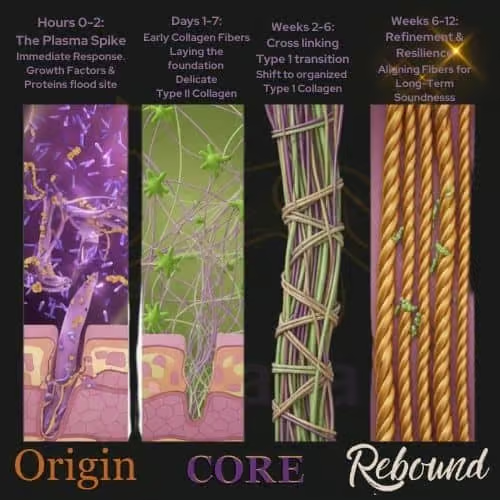
ORIGIN for foundation and development
CORE for performance and training
REBOUND for recovery and rehab
Explore the NutriSana EQ product line
References
[1] Kranenburg, L. C., Reinke, K. S., Van Den Broek, J., Zaal, E. A., et al. (2025). Free Plasma Amino Acid Concentrations in Horses Fed Different Dosing Regimens of Hydrolysed Collagen. Animals, 15(21), 3195.
[2] Oke, S., DVM, MSc. (2026, February 18). Emerging Therapies for Equine Osteoarthritis. The Horse.
[3] Sheridan, L., Hutton, P., Noble, G., & Nobari, B. (2026). An in vitro investigation into the effects of postbiotic supplementation on stabilising equine hindgut pH. Journal of Equine Veterinary Science, 156, 105746.
[4] Kentucky Equine Research. (2026, February 23). Unlocking the Potential of Postbiotics in Horses. EquiNews.
[5] Brummer-Holder, M., & Power, R. (2025). Equine microbiome shifts with dietary mannan-rich fraction inclusion. Journal of Equine Veterinary Science, 148, 105432.
[6] Li, F., Kong, X., Khan, M. Z., et al. (2025). Gut Microbiome Regulation in Equine Animals: Current Understanding and Future Perspectives. Frontiers in Microbiology, 16, 1602258.
[7] O’Reilly, K., Keller, K., Bradbery, A. N., Hess, T., & Catalano, D. (2025). Effect of antioxidant supplementation on oxidative stress in young exercising horses. Journal of Equine Veterinary Science, 148, 105493.
[8] Rakowska, A., Biazik, A., Sobuś, M., & Cywińska, A. (2026). How Inflamed Is the Horse in Training? Insights into Exercise-Induced Acute Phase Response in Endurance Horses. International Journal of Molecular Sciences, 27(5), 2328.
[9] Lacerenza, M. D., Arantes, J. A., Reginato, G. M., et al. (2024). Effects of β-Glucan Supplementation on LPS-Induced Endotoxemia in Horses. Animals, 14(3), 474.